telescope lens
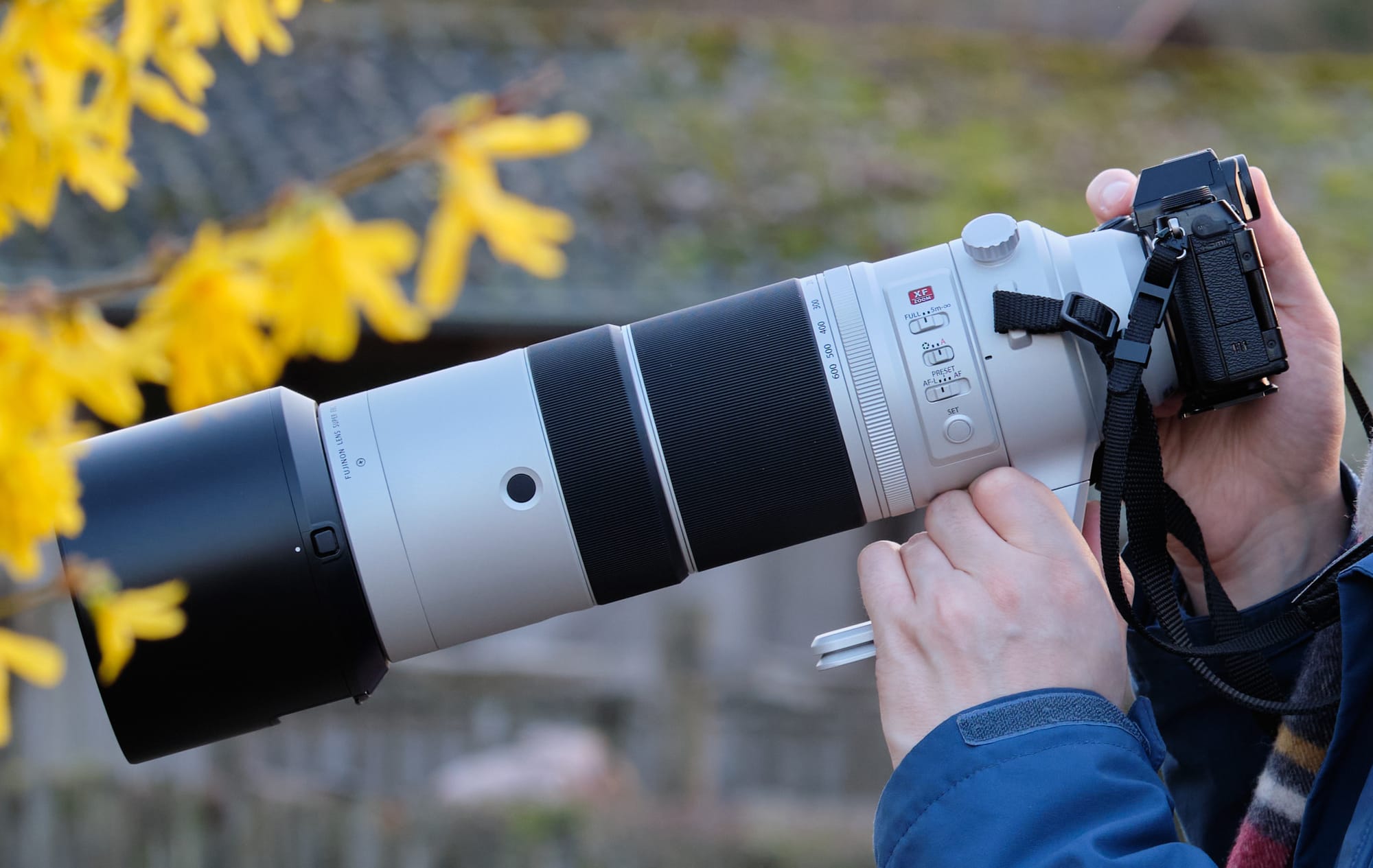
I promised to talk about the "telescope lens" in my last post. I bought it because I wanted to take photos of birds. Most birds I could easily meet were small. Too small for the lens that had served me so well in the zoo. Of course I will also talk about that later. But this time I want to show something that justifies the name: telescope lens.
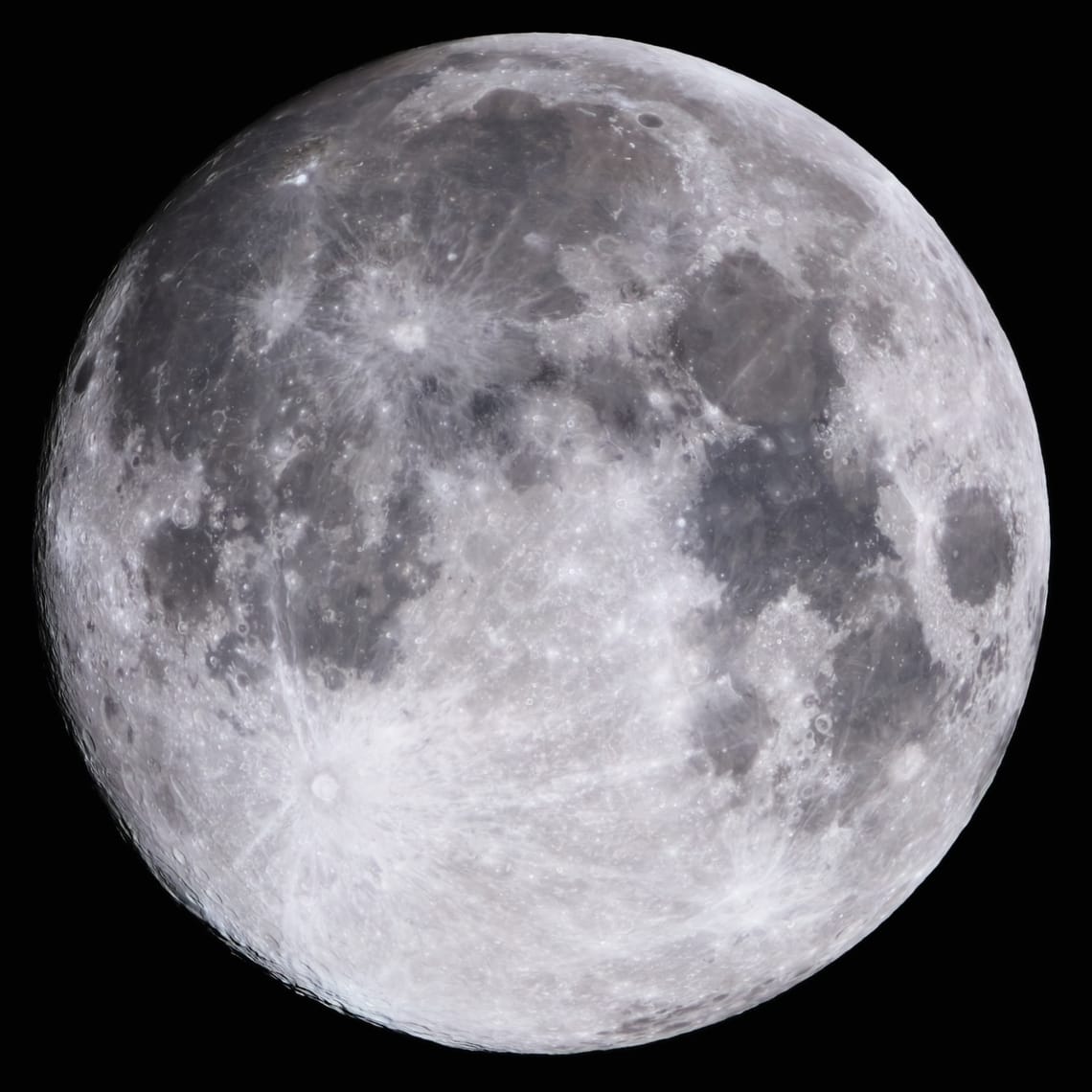
Because one of the other things that was smaller than I had thought was the moon. Too small for my 70-300 mm (a.k.a. "big zoom"). It was winter. The birds were hiding, the nights were long. So the moon became a great test for the new lens. For the photo at the top of the post I even added a teleconverter. That's a little add-on to the lens making it even more zoomed in (longer focal length) in exchange for loosing some of the light. So, in total, all the way zoomed in I had 840 mm f/11 put on a tripod on my balcony and took the picture with a 1/210 s shutter.
I was very happy with the moon picture. A little later, I tried to push one of the biggest contrasts I have ever seen on any subject into the limited range of a .jpg.
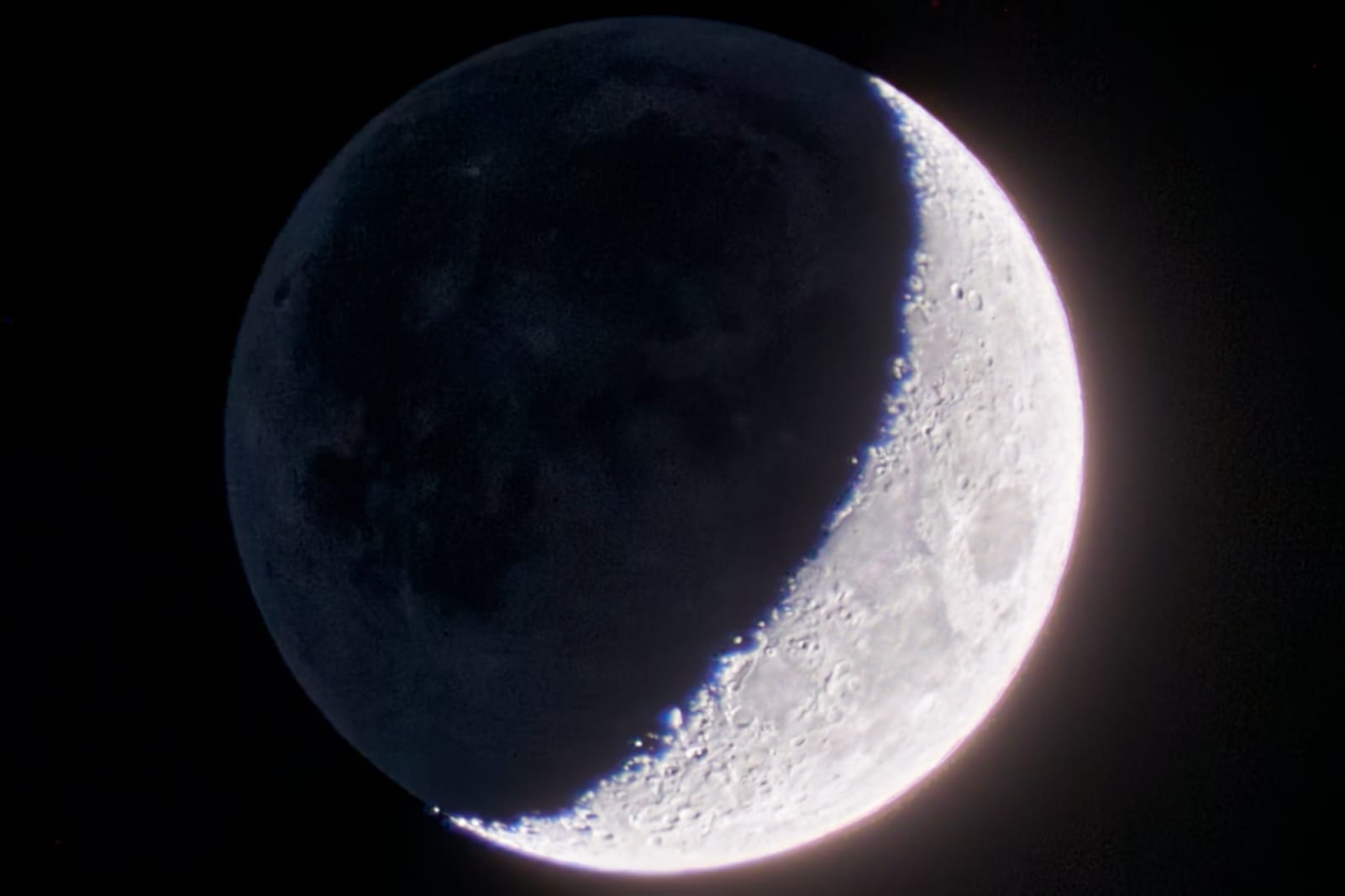
The dark side of the moon is still brighter than the space surrounding it. Light which bounced off earth is bouncing back to us from there. This light is called earthshine. It's so many times weaker than the sunlight however, that the capturing the bright and the dark side in good quality in one picture is near impossible. That's what this picture shows. But I just couldn't get the transitions right...
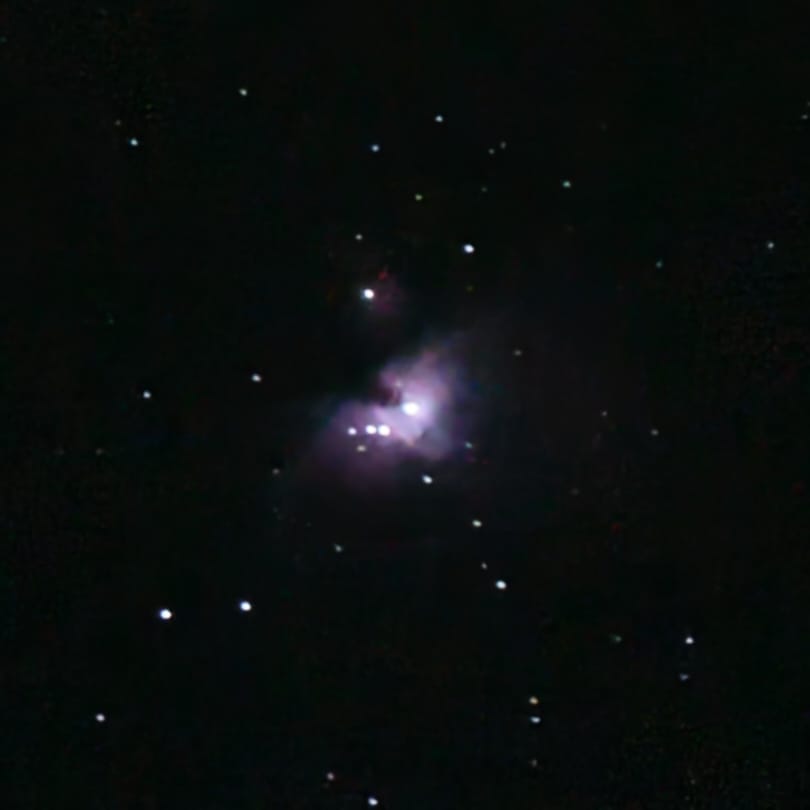
The moon wasn't the only thing I could see from my balcony though. One crystal clear night I didn't want to go to sleep yet and saw the sky sparkle with stars. I stepped out with my camera, telescope lens and tripod to investigate some more. The Orion nebula was one of the things I found. Way less bright than the moon, even after 1 s exposure. So I thought: maybe a longer?

Unfortunately, not only interesting and beautiful things become visible at such extreme focal lengths. There are also problems appearing that are otherwise beyond our everyday perception. Like a picture being blurred not by camera shake but by the rotation of the earth.
The alluring, mysterious, alien colors and shapes in the night sky, seemingly hiding in plain sight, called to me. It was a challenge I couldn't refuse. Watch this space.